


What is ATTR‑CM? Understanding Transthyretin Amyloid Cardiomyopathy and Its Role in Cardiac Amyloidosis
This page provides UK healthcare professionals with a clinical overview of transthyretin amyloid cardiomyopathy (ATTR‑CM), including disease definition, subtypes, epidemiology, and the importance of supporting earlier recognition and referral. Use the links below to navigate directly to the relevant sections on this page.
What is ATTR-CM? An underrecognised cause of heart failure
ATTR‑CM (transthyretin amyloid cardiomyopathy) is a form of cardiac amyloidosis (amyloidosis in the heart) characterised by extracellular deposition of transthyretin (TTR) amyloid fibrils within the myocardium, resulting in progressive infiltrative cardiomyopathy.
TTR tetramers dissociate into monomers that then misfold and aggregate into toxic amyloid fibrils, which accumulate extracellularly in organs and tissues
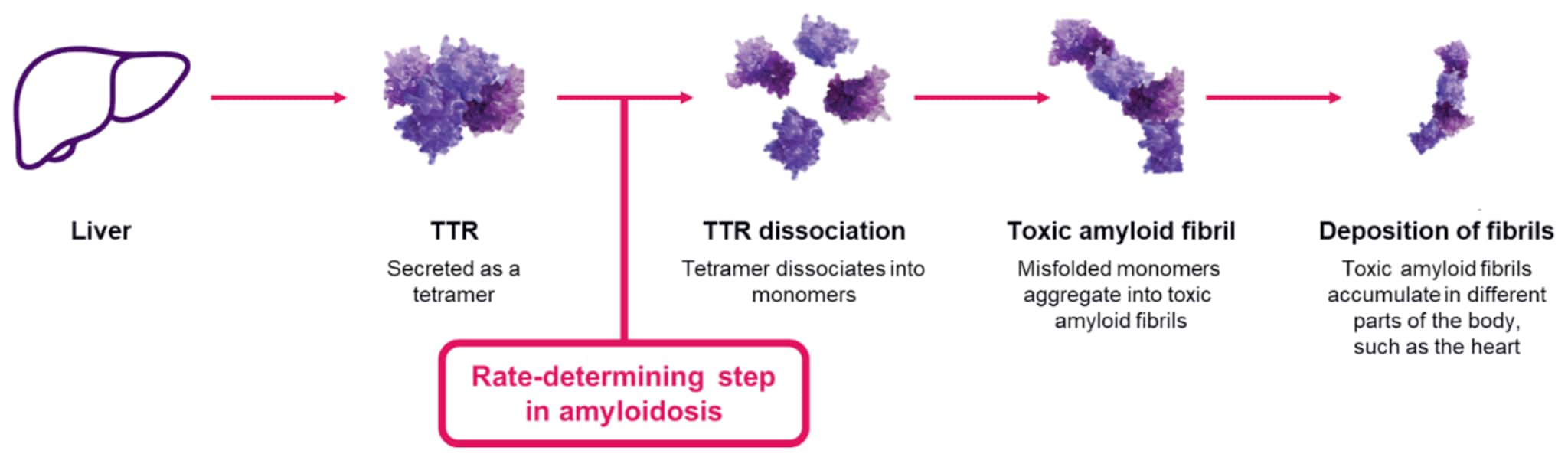
Myocardial amyloid deposition leads to increased wall thickness, diastolic dysfunction, and eventually symptomatic heart failure with preserved or reduced ejection fraction. ATTR‑CM is increasingly recognised as an important, yet underdiagnosed, cause of heart failure.
Clinical presentation often overlaps with other forms of heart failure, contributing to diagnostic delay. Disease progression may be insidious, with minimal symptoms early on, followed by gradual functional decline as cardiac involvement advances.

This concise guide provides an overview of transthyretin (TTR), a transport protein that carries thyroxine and retinol-binding protein–bound vitamin A. It introduces Beyonttra® (acoramidis), which is indicated for the treatment of wild-type or variant transthyretin amyloidosis in adult patients with cardiomyopathy (ATTR-CM). Designed for UK healthcare professionals, the guide supports understanding of ATTR-CM pathology and the licensed treatment indication.
What causes ATTR-CM? ATTR-CM causes and risk factors
ATTR‑CM results from the buildup of unstable or misfolded transthyretin (TTR) protein. General cardiac amyloidosis risk factors include aging and genetic predisposition depending on subtype. There are two main subtypes of ATTR-CM:

- Variant (also known as hereditary) ATTR‑CM (variant ATTR‑CM, vATTR-CM or ATTRv-CM): A rare, inherited form of the disease caused by pathogenic variants in the transthyretin (TTR) gene. Over 130 disease‑causing variants are known, each linked to different patterns of organ involvement and ages of onset, often associated with specific ethnic or geographic groups. In the UK, the most common variants are V122I and T60A
- ATTRv is inherited, but symptoms typically appear in adulthood. It affects men and women, usually after age 50 although earlier onset can occur
- Wild-type ATTR-CM (also known as wtATTR-CM or ATTRwt-CM): Occurs when the normal, non-mutated transthyretin (TTR) protein becomes unstable with age, misfolds, and forms amyloid deposits. The term wild-type refers to this unchanged, naturally occurring form of the protein and while the exact cause is unknown, it is thought to be linked to aging
- ATTRwt is not inherited. Although once thought to affect mainly white men over 75, it is now recognised in both men and women across diverse ethnic backgrounds, and can appear from around age 50
ATTR-CM prevalence and ATTR-CM epidemiology: How rare is cardiac amyloidosis?
While ATTR-CM has historically been considered a rare disease, emerging data suggests it is more prevalent than previously recognised, particularly in specific populations. Studies show that about 1 in 4 adults over 80 years old with certain forms of heart failure have transthyretin (TTR) deposits in their heart.
ATTR-CM prevalence in various populations
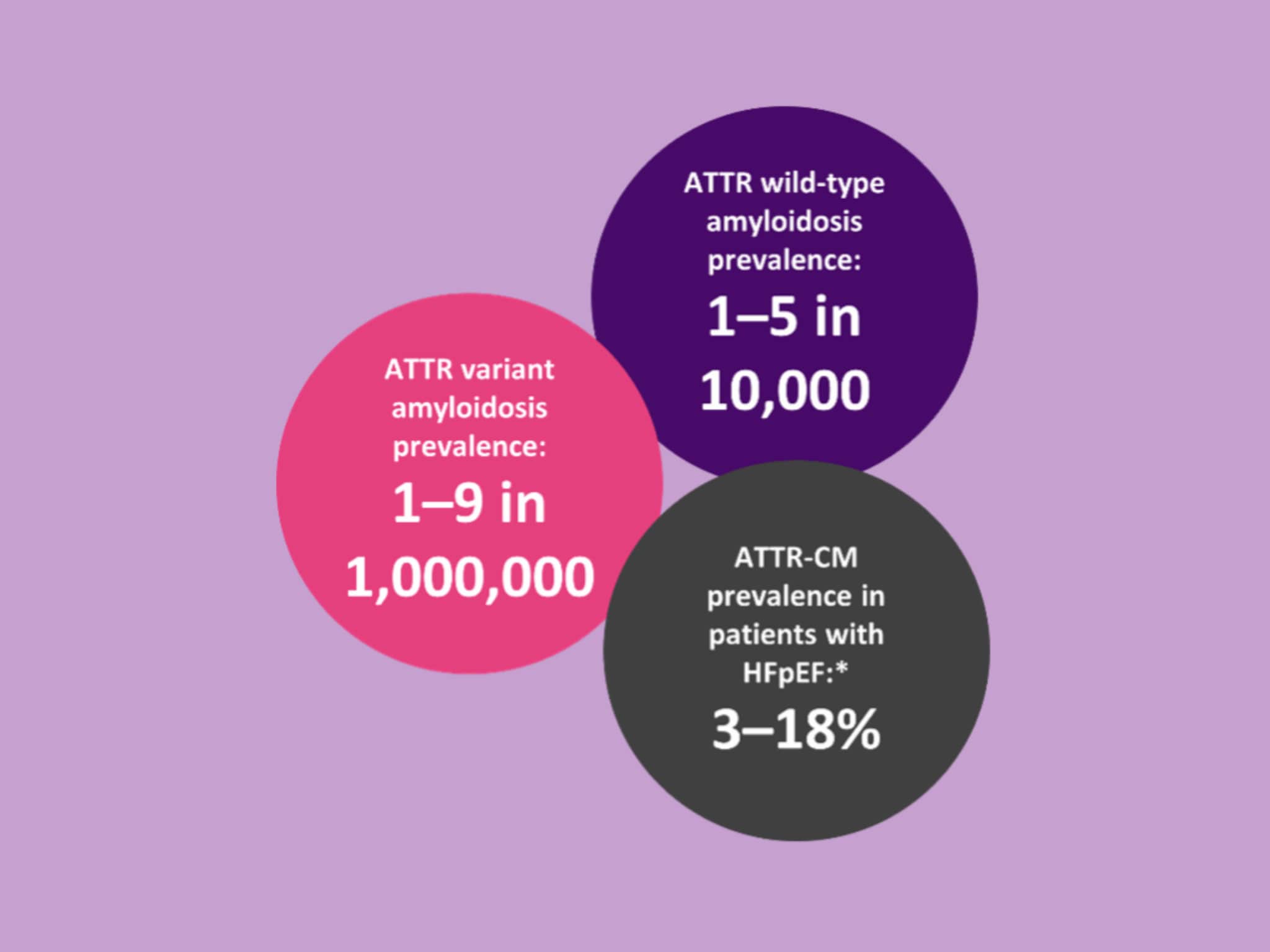
ATTR‑CM remains significantly underdiagnosed. Current estimates suggest that only a small proportion of affected individuals receive a correct diagnosis, largely due to overlapping clinical features with other cardiovascular conditions. ATTR‑CM symptoms often resemble those of other heart conditions, which can delay diagnosis or lead to misdiagnosis. Some people have no or only mild symptoms for years, until the disease becomes more advanced.
*Based on four studies in patients with HFpEF or HF with preserved/mildly reduced EF using different screening criteria, including both wild‑type and variant ATTR‑CM
ATTR-CM prognosis and management options
Outcomes vary by subtype and disease severity, but amyloidosis life expectancy without treatment has been reported as ~2.6 years in ATTRv-CM V122l and 3.6 years in ATTRwt-CM. Early recognition is critical, as disease-modifying therapies are more effective when started early.

Amyloidosis treatments and ATTR‑CM treatments help preserve heart function and improve quality of life. Treatment focuses on slowing disease progression, managing heart failure symptoms, and reducing amyloid buildup. Treatment options include:
- TTR stabilisers
- TTR silencers
- Standard heart‑failure therapies where appropriate


Abbreviations:
EF, Ejection Fraction; HF, Heart Failure; HFpEF, Heart Failure with Preserved Ejection Fraction.
PP-BEY-GB-0290 | August 2026