


ATTR-CM Diagnosis and Testing: How Amyloidosis is Identified and Confirmed
This page outlines the recommended diagnostic approach to suspected transthyretin amyloid cardiomyopathy (ATTR‑CM) for UK healthcare professionals. Use the links below to navigate directly to the relevant sections on this page.
When to test for cardiac amyloidosis/ATTR-CM
ATTR‑CM should be actively investigated in patients with unexplained left ventricular wall thickening in combination with typical clinical features or red flag findings. Early diagnostic evaluation enables appropriate referral and timely initiation of disease‑modifying therapy.

Typical triggers for investigation include:
- Increased LV wall thickness not explained by hypertension or valve disease
- Heart failure with preserved ejection fraction (HFpEF), especially in older adults
- Atrial fibrillation or conduction disease
- Discrepancy between ECG voltage and wall thickness on imaging
- Cardiac and extracardiac red‑flag features
ATTR-CM amyloidosis diagnosis algorithm and referral pathway to the National Amyloidosis Centre (NAC) and regional centres
Early and accurate amyloidosis diagnosis is essential because ATTR‑CM is frequently under‑recognised and shares features with many other cardiac conditions. Clinicians often pursue a structured approach to diagnosis for amyloidosis/ATTR-CM when symptoms, imaging findings, or red flag features raise suspicion. This helps improve early recognition and guide treatment selection.
A comprehensive ATTR‑CM diagnosis involves ruling out light‑chain amyloidosis (AL amyloidosis), followed by targeted cardiac imaging and laboratory assessments. This process helps clinicians distinguish ATTR‑CM from other cardiac conditions, such as hypertrophic or hypertensive cardiomyopathy.
Next steps if ATTR-CM is suspected
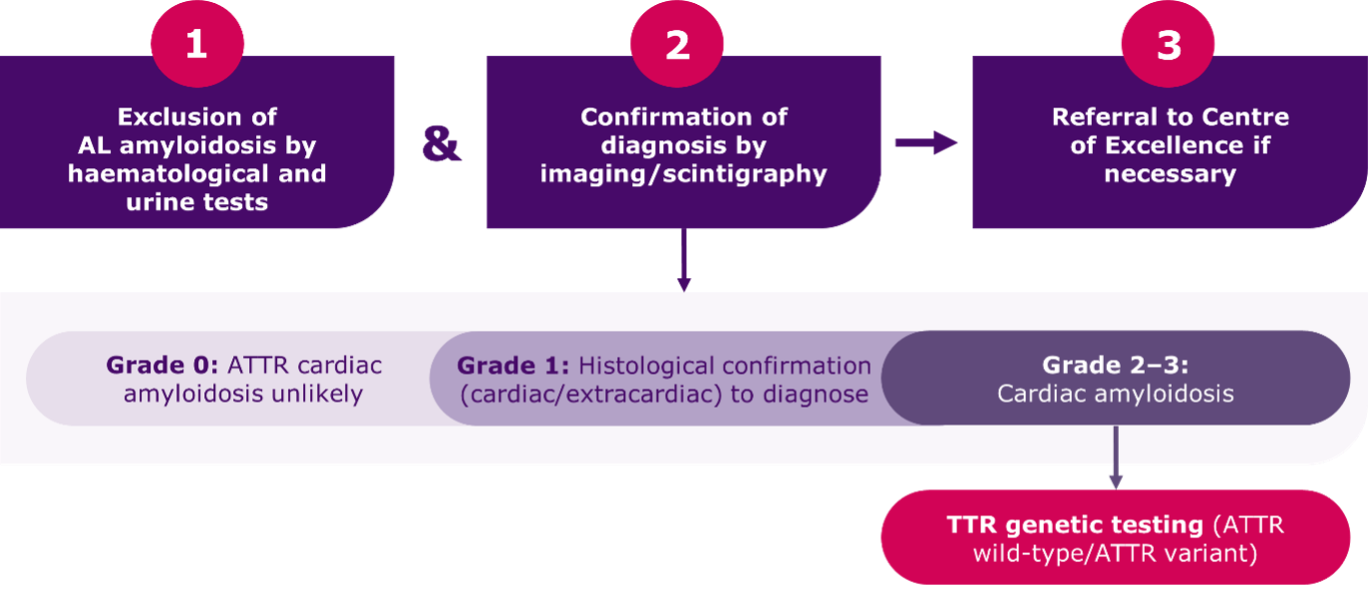
Expand the boxes below for more detail
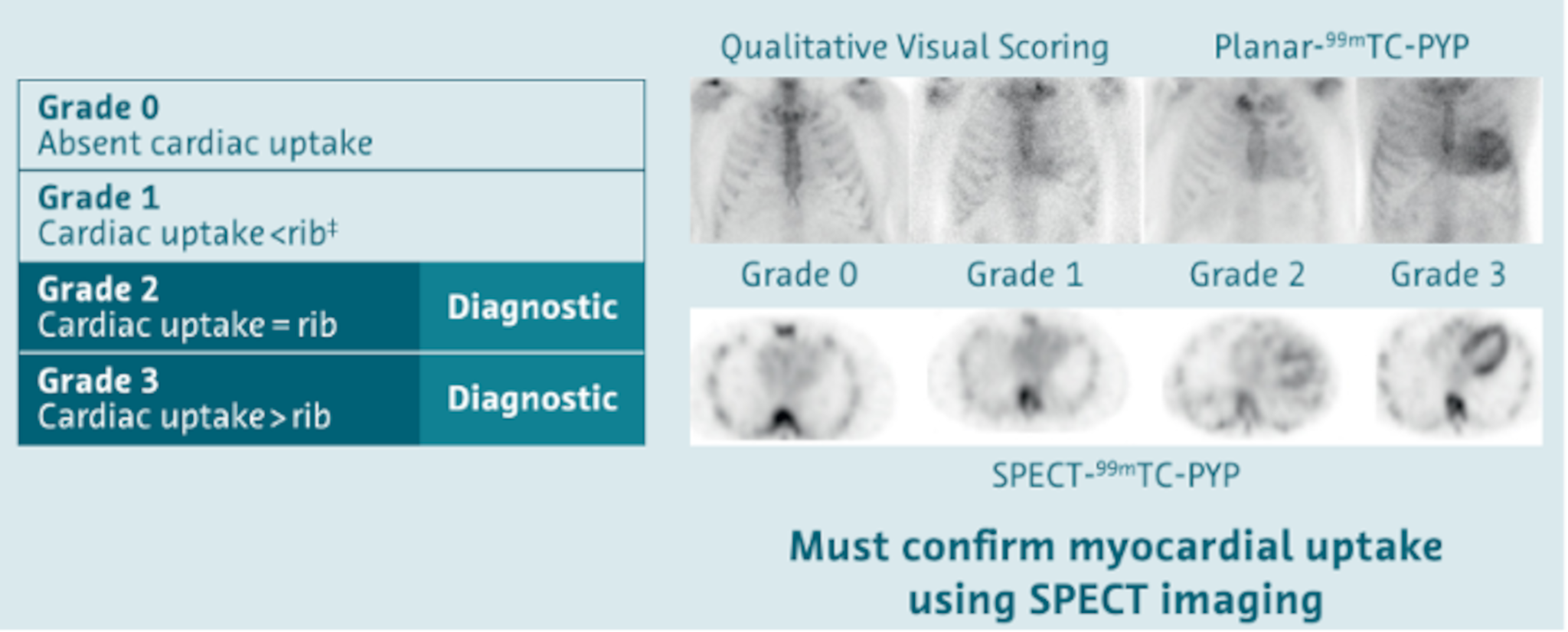
Post-diagnosis management of patients with ATTR-CM
The ATTR‑CM patient pathway outlines a structured approach to amyloidosis diagnosis, from initial clinical suspicion through ATTR‑CM diagnosis, treatment initiation, and long‑term follow‑up, involving both local cardiology services and specialist amyloidosis centres.
ATTR-CM diagnosis and management in the UK
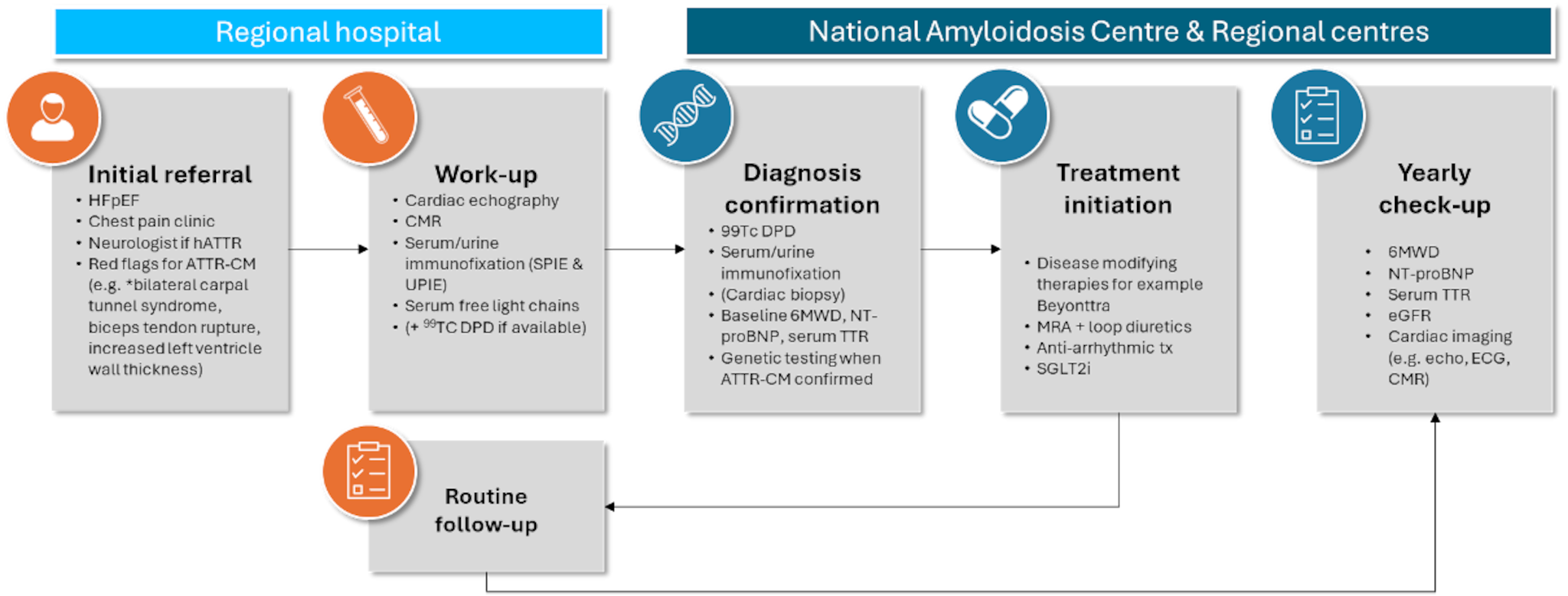
This pathway reflects current UK expert consensus and highlights the importance of early recognition, appropriate testing, and timely referral to optimise outcomes for patients with ATTR‑CM.
*TTR deposition in ligaments starts 10–15 years before the first cardiac symptoms.
Diagnostic work-up and confirmation: Evaluation uses a structured amyloidosis diagnosis algorithm with a full monoclonal protein screen to exclude AL amyloidosis, followed by cardiac scintigraphy; if consistent and AL is ruled out, ATTR‑CM can often be diagnosed non‑invasively, with genetic testing to define subtype.
Treatment initiation: Following diagnostic confirmation, patients are managed in collaboration with specialist amyloidosis centres. Treatment typically includes disease‑modifying therapy for ATTR‑CM, alongside optimisation of heart failure management and control of associated arrhythmias, tailored to individual patient needs.
Follow-up and monitoring: ATTR‑CM requires ongoing specialist‑led follow‑up, with regular assessment of functional status and cardiac biomarkers (such as 6‑minute walk distance and NT‑proBNP) to monitor disease progression and treatment response.



Abbreviations:
6MWD, 6-minute walking distance; CMR, cardiovascular magnetic resonance; ECG, electrocardiogram; eGFR, estimated glomerular filtration rate; HFpEF, Heart Failure with Preserved Ejection Fraction; MRA, mineralocorticoid receptor antagonist; NT-proBNP, N-terminal pro B-type natriuretic peptide; SGLT2i, sodium-glucose co-transporter-2 inhibitors.
PP-BEY-GB-0292 | August 2026